


J + 12 : When the Corsairs got a bloody Nose

View on the Spanish Castle and the Old Town of Agropoli, at the back the Old Harbour
Every 29th and 30th of June, Agropoli celebrates its Patron Saints, Peter and Paul. A procession of believers moves from the town to the old town at the top of the rock and back again. At first glance, it looks like any of the many processions in Italy. Until you discover a group of maybe 30, mostly young people, who march in Renaissance costumes, following their drums section and waiving flags. You met the "Associazione Sbandieratori Agropolesi dei Feudi del Cilento e Vallo di Diano", a group of reenactment enthusiasts founded 20 years ago.

The Reenactment Enthusiasts who celebrate the Victory over the Turks in Period Costums
On the day of their Patron Saints, the town also celebrates the victory over 700 Ottoman corsairs in 1630. They tried to take it at dawn by surprise. A flotilla of seven war galleys and two brigantines from Algiers and Bizerte sneaked under the cover of darkness into the port. 400 of the attackers approached Agropoli and got into town through an open window in the wall which was left open by mistake. After the first shots, the surprise was gone. The church bells called the Agropolesi to gather in the castle. Most people made it. A fierce combat on the walls ensued. The Turks tried to climb them with ladders and ropes but did not take the fury of Agropoli's women into account. Having no desire to be sold into North African harems, they fought like lionesses.

The Drums Section in Front of Agropolis Town Gate from the 7th Century AD
People from neighbouring Cilento heard the battle noise and decided to counter attack. When they reached the Piano della Madonna and took up formation, the Turks were between a rock and a hard place. After a morning of bloody hand to hand fighting, 200 Turks lay dead in the streets and trenches. The attackers had to retreat to their ships but not before looting the entire town. Seven Agropolesi were killed. The horror of that early morning attack and the bravery of the women on the castle walls are told to today.

It is not difficult to imagine how bloody the Fighting on the
Castle's Walls was in 1630
It was not the first time that Agropoli was attacked. Less than 100 years earlier, the "famous" Ottoman Corsair and later Admiral Barbarossa had sacked the town, burnt it to the ground and enslaved 100 people. The Angevin - Aragonese castle was reinforced - a very good investment with the benefit of hindsight.

Agropoli's Old Town seen from today's Harbour on the South Side
The Agropoli promotory was settled since bronze time. It offered an easy to defend location and the Testene river to the east formed a natural, small harbour. When the Greek arrived in 625 in Paestum (they called it Poseidonia), they settled further north on the flat plain but built a temple for Artemis on the promotory. As Paestum's harbour silted, Agropoli and its natural harbour became more important. The Romans established a small settlement here called Ercula. jBut the Byzantines were the first to fortify the rocky hill. Needing another strong point south of Salerno during the wars with the Germanic tribes, they built the first castle between 530 - 550 BC. Since then it has been here, surrounded by the old town.
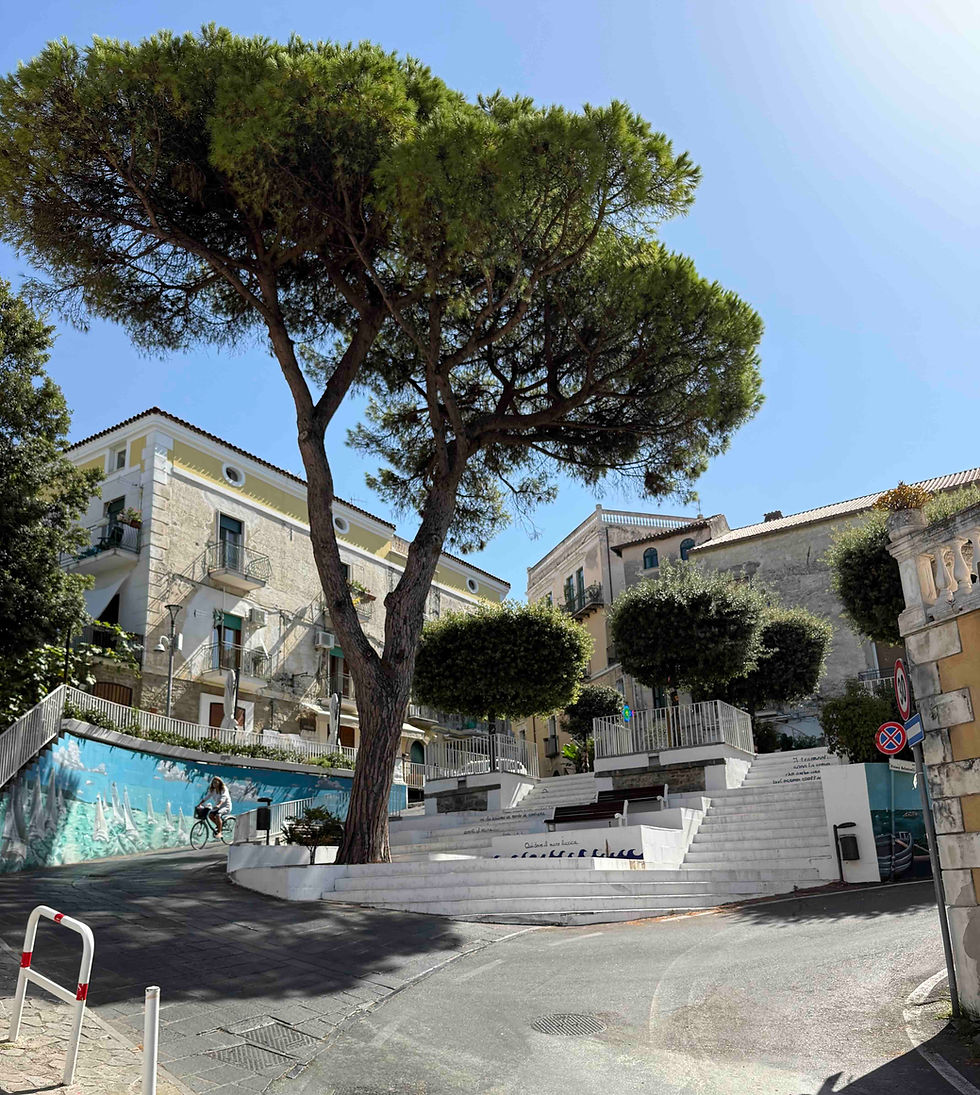
Walking from Agropoli's Port to the Old Town on the Hill
In the subsequent centuries, the town changed hands as all of southern Italy did. From 882 - 915 AD, it was for 33 years an Arab bridge head. Most people forget that the Fatimid dynasty and its followers in North Africa made serious efforts to conquer Rome and all of Italy. Had it not been for the mariners of Pisa, Genoa, Naples and Amalfi, they may well have succeeded. After the eviction of the Saracens, as the Arabs were called, Agropoli was ruled by Normans, Spain, the Bourbons, the French under King Murat and then the Bourbons again. In 1860, it became part of united Italy.
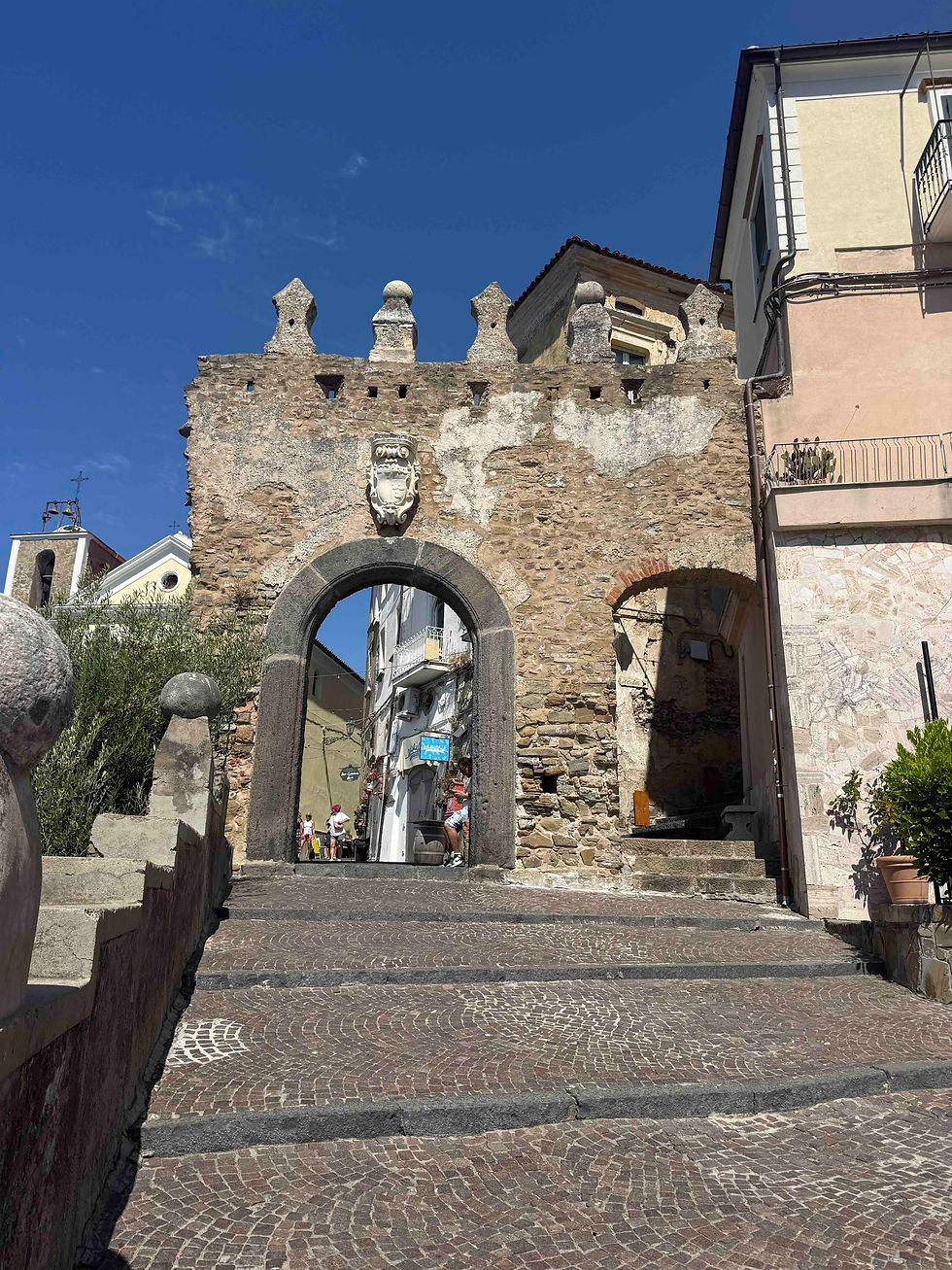
Agropoli's 14 Century old Town Gate is now a main Sight
Today, Agropoli is a pretty seaside resort, full of tourists from June to August. Now that everybody returned home, the town looks a bit sad. Streets and restaurants are empty. But the old town is in far better shape than 15 years ago when I was the last time here. Definitely worth a visit and together with Paestum which we visit tomorrow, a perfect representation of the history of this part of Italy.


Comments