


J - 125 : Was Saint Paul Getting a Free Ride to Visit the Jewish Diaspora in Rome?
Updated: Apr 27
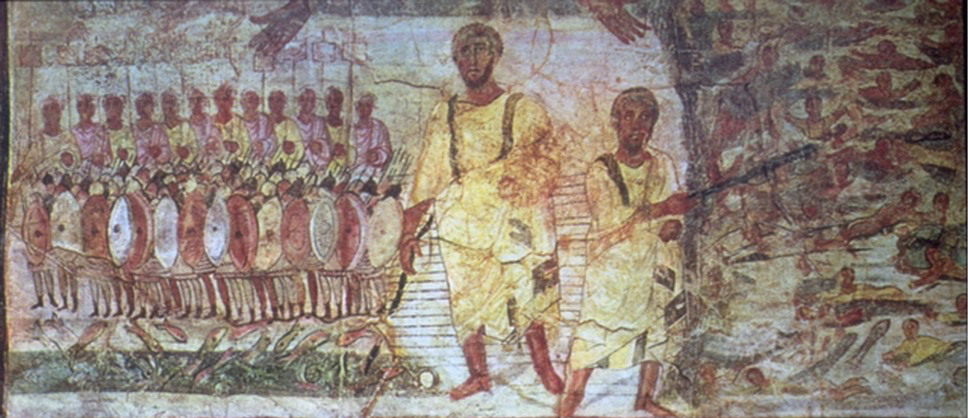
Moses leading his People thru the Red Sea. Fresco from Dura-Europos Synagogue 250 AD
Everybody knows the story. After his 3rd mission to Asia Minor and Greece, Apostle Paul returned in 58 AD to Jerusalem to celebrate Passover. In his company were a few gentiles, Romans who converted to Christianity without following the Jewish purity rules (for men = being circumcised). He triggered a riot when he brought these “impure” to the temple. Only the presence of Roman soldiers prevented his lynching.
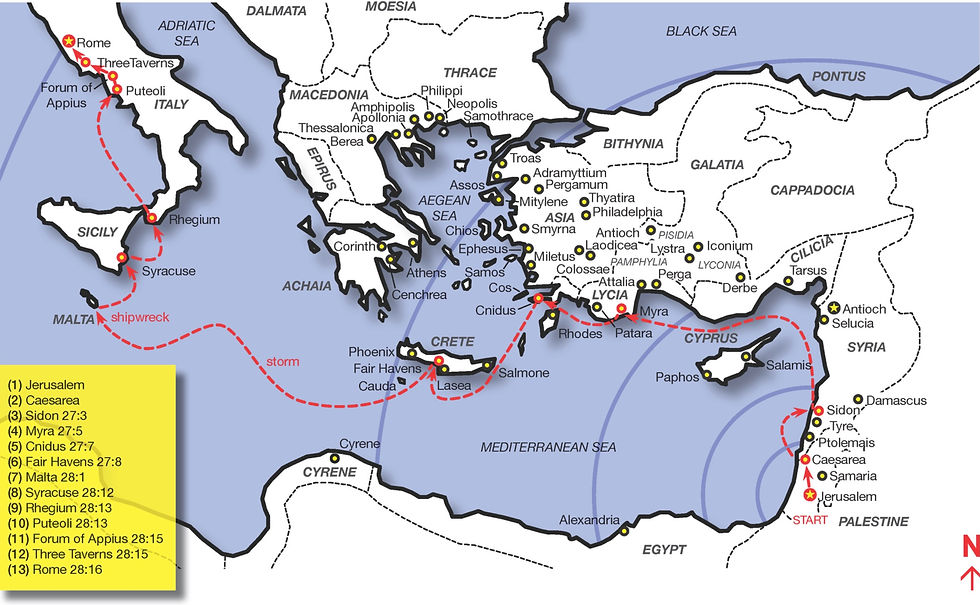
Apostle Paul's Journey as a Prisoner to Rome 59 - 60 AD - Acts 27:1 - 28:16. We follow his tracks this summer from Malta to Pozzuoli
The Jewish high priests were upset, demanded his extradition and planned to execute him. What a nuisance for the Roman officials in Jerusalem, who tried to keep the fragile peace between Romans and Jews. They decided to transfer Paul to Caesarea, the Governor’s residence. How explosive the situation was illustrates the fact that a full centurio (100 soldiers) had to protect Paul during the transfer to the coast.
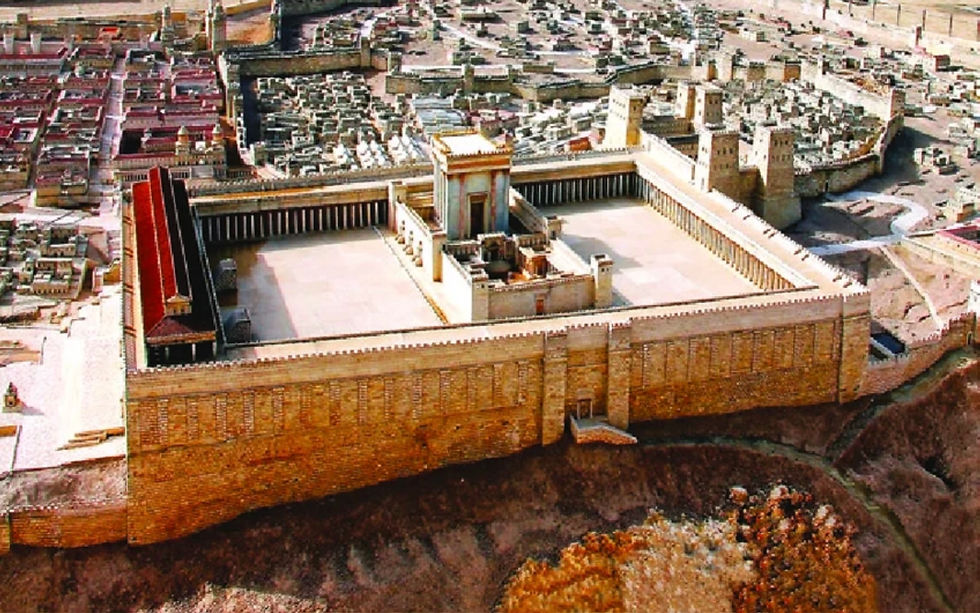
Recreation of Herod's Temple in Jerusalem around 50 AD (from Research Gate)
Once in Caesarea, the governor put him under house arrest and deliberated his fate for two full years. Under Roman law, Paul had done nothing wrong. Roman officials were not allowed to extradite innocent citizens. What could be done? Paul always asked to be tried by the Emperor – a request that puzzled me. How would a ruler who governed 60 – 70 million people find time for an individual accused of trespassing a religious site?
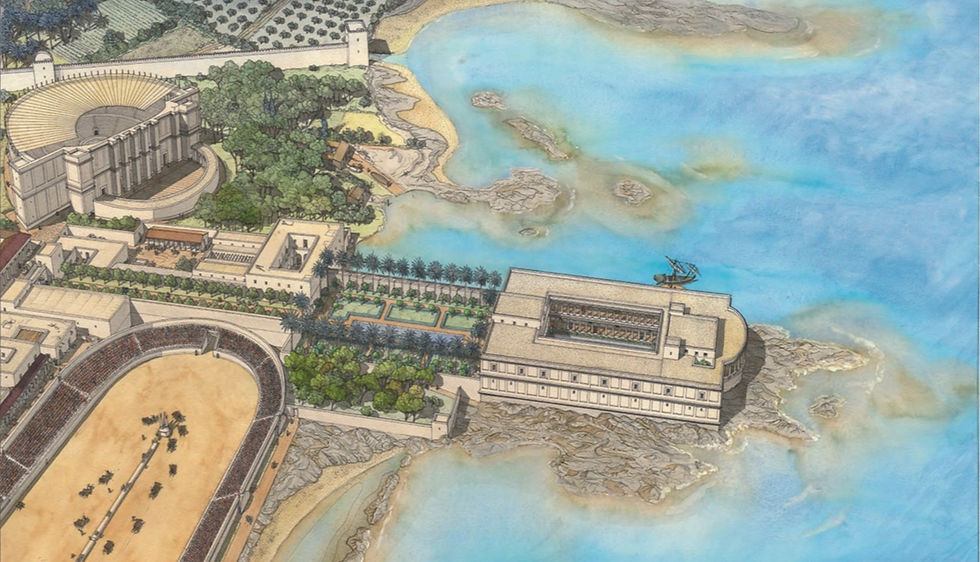
Herod's Palace in Caesarea where Apostle Paul was kept under House Arrest for 2 Years
Looking at Saint Paul’s previous missions, I noticed that he frequently travelled to cities with a significant Jewish Diaspora (Corinth, Miletus, Ephesus, Athens and many more). He preached in the synagogues and tried to convince his Jewish fellows that Jesus was the Messiah predicted in the Thora and that redemption had arrived. His preaching was based on the Septuagint, the Ptolemy translation of the Thora from 250 BC, who said that the Messiah would be borne to a virgin and that he would be welcomed by the people of Jerusalem as a king – as Jesus was on Palm Sunday.

Jewish Diaspora in the Roman Empire around the 1st Century AD
In the first century AD, the Jewish diaspora in the Roman Empire was large. It is said that more Jewish lived abroad than in their home country. Numbers are difficult to get but it seems that about 4.5 – 7.0 million Jewish people lived outside Palestine. Under Augustus, about 10’000 in Rome alone, based on Synagogues and Jewish cemeteries. Most lived in Trastevere, at this time outside Rome’s walls. Such a large number would explain why Paul wanted to go to Rome.

Mosaic in the Cupola of St Paul's Outside the Walls - Jesus flanked by St Peter and St Paul
Saint Paul lived during a formative period after Jesus was crucified and before the Gospel was written. For a good 50 – 60 years, Jesus’ story was passed on verbally. From time to time, letters from Saint Paul clarified content and meaning. Only towards the end of the 1st century AD were the four gospels written in Antioch, one of the Empire’s four capitals (Trier, Rome, Alexandira and Antioch). They were in Greek, the Septuagint language, confirmimg that they were written for the Greek speaking Jewish Diaspora, not the people in Israel.
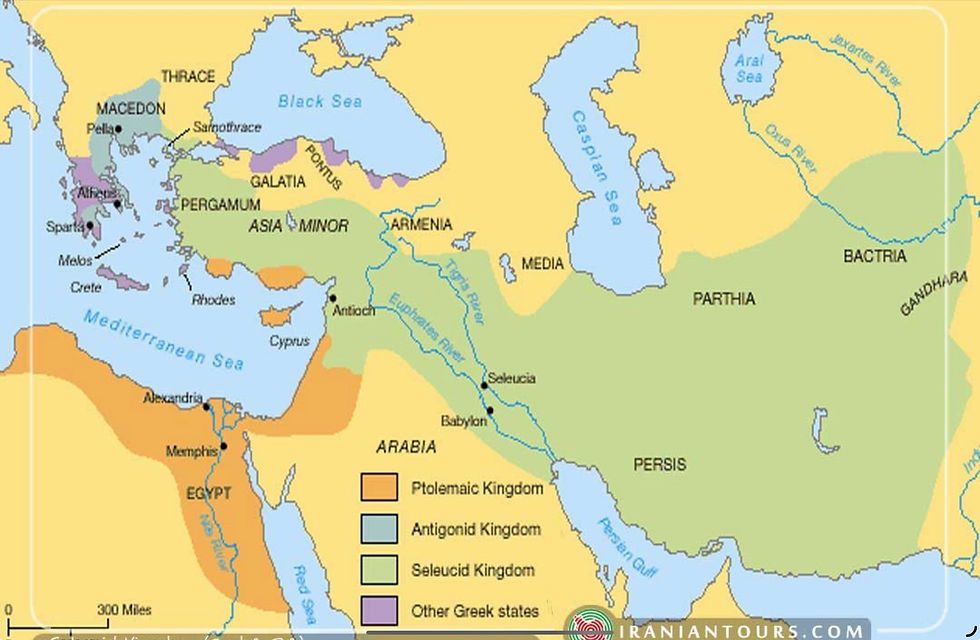
The Carving up of Alexander the Great's empire after his untimely Death in 332 BC. For Centuries, the Ptolemy and Seleucid fought over and destroyed the Levant and Palestine
Why was there such a large Jewish diaspora in the early Roman Empire? We know that Nebuchadnezzar forced the Jewish nobles into exile after his capture of Jerusalem in 605 AD and that Persian Emperor Darius allowed them to return. But many stayed which made Babylon the largest Jewish community outside Palestine. Jewish people were liked as scribes and teachers due to their literacy. Thanks to their tightly knitted family network they were also respected merchants. Under Persian rule, Jews established diaspora communities throughout the Persian Empire to conduct their commercial activities.

A Corbita, a Roman Freighter, leaving Alexandria around 100 AD - AI Designed Photo
In my view, the first wave of Jewish emigration. The second followed in 332 BC with the end of Alexander's empire. His generals divided it amongst themselves. The Ptolemy and the Seleucids got the largest junks. The Ptolemy got Egypt, Palestine, Cyprus and Lydia. The Seleucids the Indus Vally, Afghanistan, large parts of Turkmenistan, Persia, Mesopotamia, Anatolia and the northern levant. For over 200 years Ptolemy and Seleucids fought for control of the Levant and Palestine. With two superpowers fighting over their land, thousands of Jewish people became refuges. In an ancient war, armies plundered every-thing that was edible. Civilians starved to death - they had to flee. Many Jewish families , specifically the one with trading connections, arrived on the Italian peninsula.
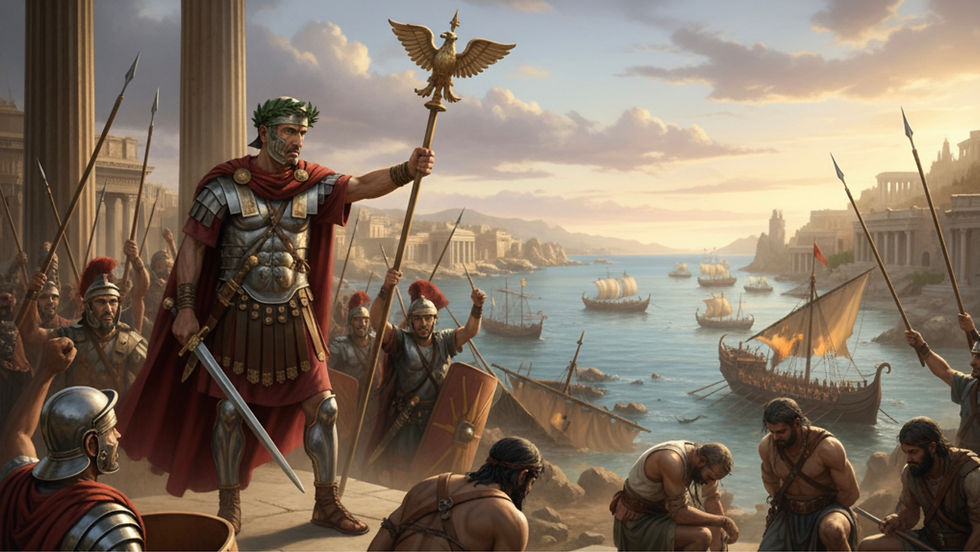
Gnaeus Pompeius Magnus (106 - 48 BC) defeated the Silician Pirates, conquered the East but was defeated by Julius Caesar in the following Civil War and assassinated in Egypt
The third wave happened after Pompey conquered Palestine from the Seleucids in 67 BC and returned to Rome with many Jewish slaves. Being learnt people, many were given their liberties but they stayed in Italy. The 4th and last wave came after the failure of the Jewish rebellion 66 – 73 AD when Rome captured the Jewish population and sold them as slaves across the empire. But this happened after Saint Paul.
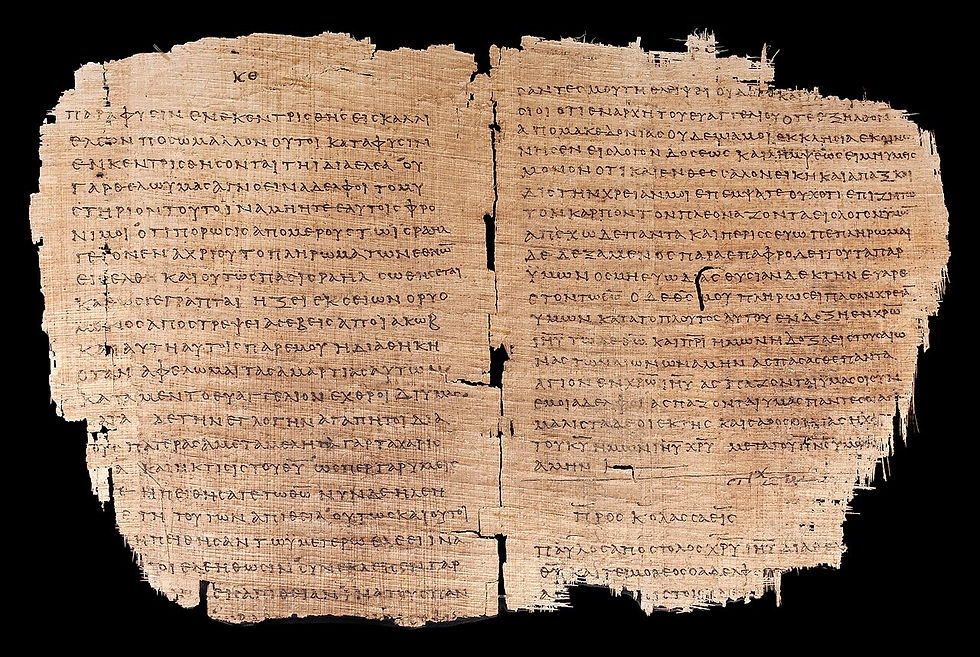
Bifolio from St Paul's Letter to the Romans - one of the oldest surviving Copies of his Epistles
We have a fairly good idea what Paul did in Rome. He welcomed visitors, preached about Jesus, interacted with the Jewish community and wrote epistles (Ephesians, Colossians, Philippians, Philemons, Roman). Whether he was always under house arrest and was ever tried is murky. He enjoyed a considerable degree of freedom, was able to travel and to continue his mission with little obstruction There are even rumors of missions to the South of France and Dalmatia. Am convinced that he played an important role in the shaping of the gospel and in keeping the vulnerable small Christian community out of the conflict between Rome and the Jews. He was murdered under obscure circumstances in 64 AD when Nero rounded up “infidels” as scape goats for the burning of his own capital.
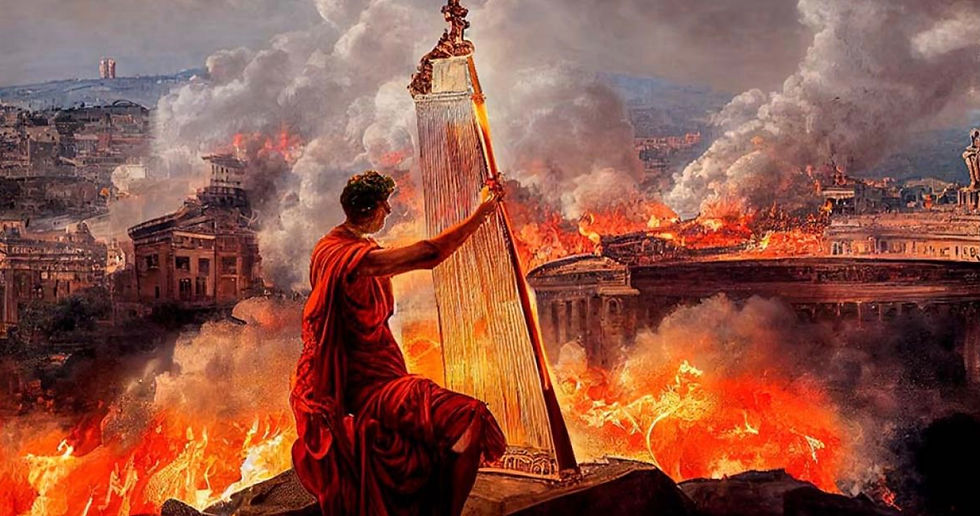
That Emperor Nero serenaded his own Fire is probably a Myth - but it still holds to today
Christianity would not have survived without Paul’s work in Rome. Am sure Paul knew he had to be to Rome for Christianity to be successful. Maybe his demand to be tried by there was just a pretext. In any case, Paul got a free ride to Rome. He probably would not have been able to afford the journey by his own means. As a tent maker he could earn a living but not a 2’300 km oversea trip to the capital of the world’s biggest empire.
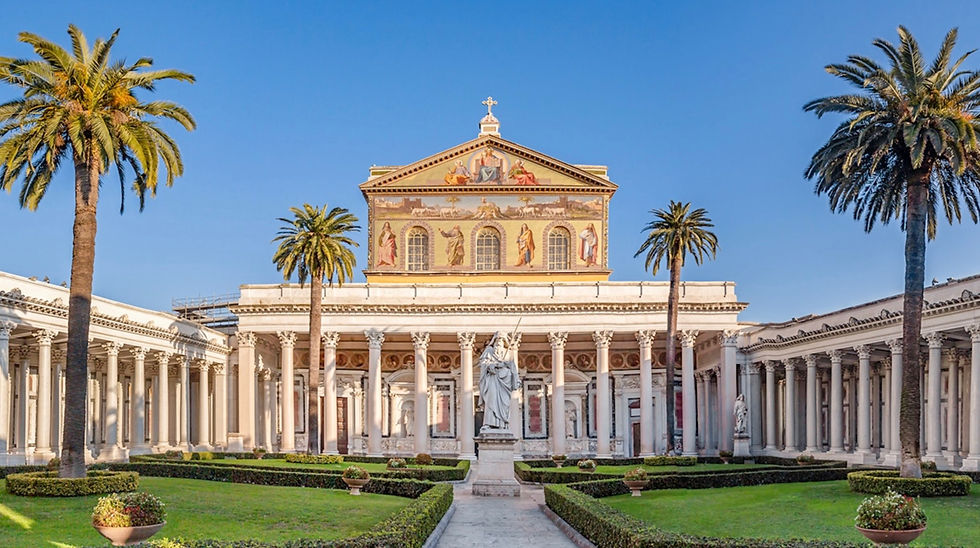
Saint Paul outside the Walls is for the History of the Catholic Church more important than the Vatican - Without Apostle Paul Christianity would have remained a small Jewish Sect


Comments