


J - 171 : Submerged Villas in Baiae
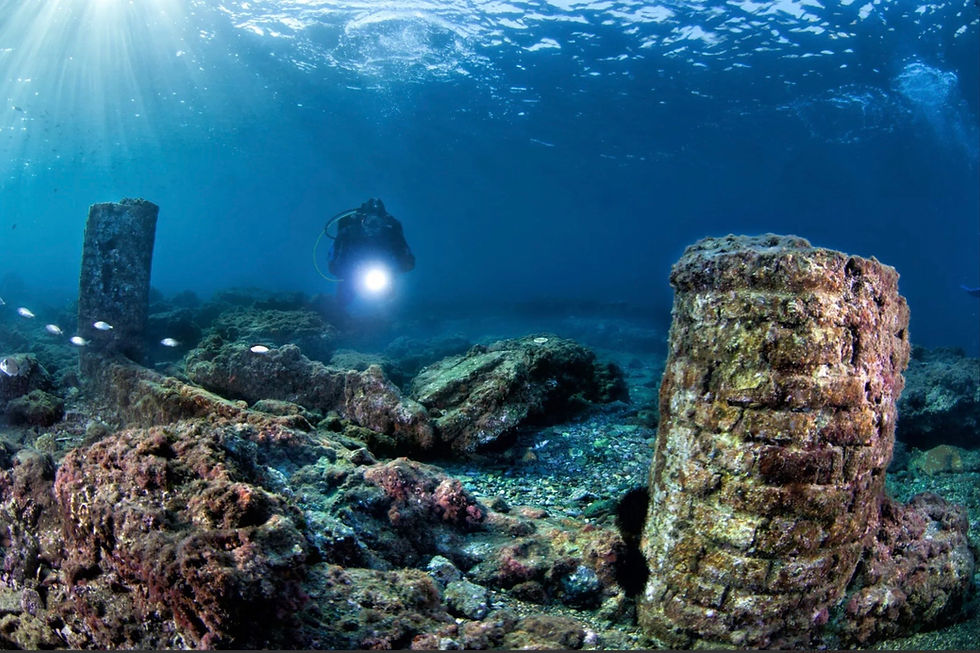
Scuba Divers are allowed to explore the Submarine Archeology Park in Baiae
Despite fumes, frequent tremors and occasional eruptions, Greeks loved to live in and around the Bay of Naples. Nea Polis (Naples), Kumai (Cumae), Pithekousai (Ischia), Dicaearchia (Pozzuoli) and Poseidonia (Paestum) are the best known ancient Greek settlements which still exist today. The Romans loved loved living there too as did the Etruscans (founders of Capua) and the Samnites (founders of Pompeii). Both were later absorbed into the Roman Republic.

The Shoreline of Baiae and Puteoli during Roman Time
Until Ostia, Rome’s own port, was significantly expanded in the 1st century AD, Pozzuoli was the Republic’s largest harbor. Grain ships from Sicily landed here, it was the final destination for the luxury goods from the Levant, Egypt and India, wine from Crete and Melos arrived in Pozzuoli, as well as olive oil from Carthage, garum (the fish sauce) from southern Spain together with silver, tin from Cornwalls, copper from Cyprus and amber from the Baltics. If you wanted to make money, Pozzuoli was the place.

Roman Warships and Commercial Vessels - Artist Impression of a Roman Port
Pozzuoli and nearby Lake Avernus were also Rome’s main naval base. The Republic had 300 – 400 warships after the Punic Wars. These ships needed regular chalking, new planks, oars and sails. Their maintenance was expensive. The 20’000 mariners living on station also had to be fed, clothed and paid. This beehive of naval and commercial activity attracted merchants, powerful senators and aristocrats from Rome.

Bay of Pozzuoli - old Baiae in the Forground - the Roman Port of Puteoli on the opposite Side - the old Shore Line was about 200 - 300 meters further out
Just opposite Pozzuoli, across the bay and a good mile to the west, was Baiae located on a hill slope with many volcanic vents. It was far away from the smelly port of Pozzuoli and enjoyed fresh air from the west. It also was the place where hot gas from the Campi Flegrei vented into the air. There are several how water springs, heated by the volcanic underground. By around 80 BC, Rome’s political and commercial elite started building villas on Baiae’s seafront and the hills overlooking the bay. The hot vents were perfect for heating the well known Roman baths – Baiae became a kind of a Spa for the Republic’s rich and famous. Many Roman leaders like Pompey or Julius Caesar became residents as did his adopted son Augustus and his loyal lieutenant Agrippa.

The Pozzuoli (Potuoli) Bay with Ancient Coast Line and Position of Submerged Roman Villas
Baiae kept its status as “the place to be” during the time of Imperial Rome. Emperors Nero, Hadrian and Septimus Severus kept villas in Baiae and governed for long stretches of time from here. Other emperors visited frequently. Since Tiberius had made his Villa Jovis in Capri his seat of government, running Rome from outside the capital was not a tabu any longer. I dare say that many senators preferred doing business in Baiae rather than spending their time in crowded and dirty Rome.

Wonder which of the Baiae Villas is shown on this Photo - Does anyone know?
The Campi Flegrei were not a stable building ground though. After Vesuvio’s eruption in 79 AD, Baiae’s seafront began to slowly sink – one or two centimeters per year – almost unnoticeable. But by 500 AD, the seafront with the villas, the old shore and town’s harbor were lost. Slowly but steadily inundated by the waves of the Mediterranean. The beautiful villas now lie two to five meters below the sea. Their walls and roofs collapsed, their floors covered by sand and pebble stones, their decorative statues fallen to the ground. Being covered by sand for centuries though had its advantages. The UV light could not bleach the mosaics – they are pristine and colorful – as if laid yesterday.
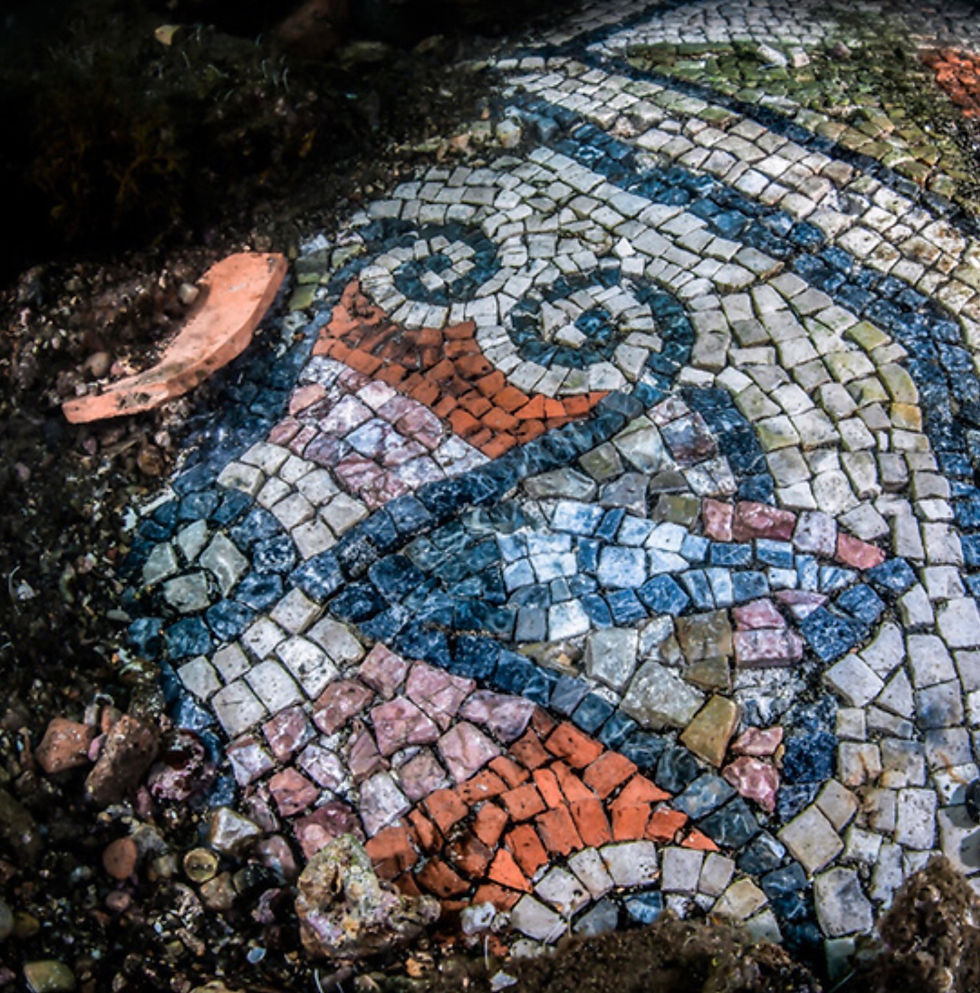
One of the colorful Mosaics which the Guides always
cover with Sand again before the Visitors leave
Our ancestors knew for centuries that there were lost parts of Pozzuoli and Baiae below the sea. But only in the 19th century did excavation start. In1803 the first statues were lifted from the sea floor. Systematic exploration started in 1941 during World War II. The Italian dictator Mussolini needed positive headlines and cultural victories to keep his dream of an Imperial Italy with a Mare Nostrum alive. The archeology work continued to this day – albeit without the nationalistic undertones. The latest villa was discovered in 2023.

One of the 14 Dives you can Book in the Baiae Submarine Archeology Park
To protect the site, the “Baiae Archeology Park” was created. It covers 1’780’000 m2 of sea floor . The original statues placed in the Archeological Museum of the Phlegrean Fields were replaced by replicas and look at you on the sea floor. If you have a PADI license you are allowed to explore the site with a guide. There are 14 different dives. Photos and videos are amazing. I will put the official site and a link to a YouTube video at the bottom of my blog. We will arrive in Pozzuoli on the 19th of September. Will definitely book a dive on the 20th. This is something not to miss.

A happy Scuba Diver enjoying the Beauty of the Baiae Submarine Archeological Park
Have a look at this video - excellent summary
The official Submarine Archeology Park site:


Comments