


J - 157 : Campania - Food Rich in History

Coletura di Alci is a Spaghetti Dish made with a modern Descendant of Roman Garum
Working on the menu for the upcoming three weeks of sailing in September is fun. We want to eat local food. What is the point of travelling around the world if we eat what we get at home? Time to dive into the cuisine of Campania. It reads like a history book. Food from Campania is a heritage of ancient Greek and Roman dishes combined with Arab, Norman and Spanish influences. There is so much to talk about, I wonder whether one blog is sufficient to cover the subject. Maybe I do two. The region prides itself for the very first pizza, the world’s best mozzarella, lemons from Amalfi, Café Napoletano, its pastries and its wines (definitely going into a separate blog).

Pizza Margherita - One of the simplest and still best Pizzas one can eat
Let’s start with Pizza Margherita - made famous thanks to Italian emigration. Whilst said to be invented under the Burbon Kings – hence the reference to Queen Margherita – the dish has ancient roots. Topping and baking flat bread with garlic, herbs and olive oil was already done by Romans. The tradition survived somehow the dark ages after the fall of the Empire. Pizza is mentioned in texts from the 13th century. It eventually became a staple food in the 18th century when Naples’ population doubled to 400’000 people. 1/8 of them were so poor they dressed in rags and were called “Lazarinni” in reference to biblical Lazarus. They bought their pizza from street vendors – one slice at the time. Their pizza was nothing fancy. Toppings were garlic and lard. Cheese was too expensive. And tomato. The exotic fruit from Latin America was not well known yet. Chefs looked down on it – which made it cheap and got it on top of Lazarinni pizza slices.

A Pizza Street Vendor in Naples in the 19th Century
The pizza’s international breakthrough came in 1889, when Italian King Umberto I and Queen Margherita visited Naples. Tired of their French cuisine, the Queen asked for local food. She was served three pizzas: one with lard and caciocavallo (stretched-curd cheese), one with cecenielli (baby artichokes or sardines) and one with mozzarella, tomato and basil. The one she loved the most was the last one. It was named in her honor Pizza Margherita. Pizza suddenly became respectable food. By 1905 the first Pizzeria opened in New York. When the war efforts in World War II required affordable, mass-produced food, pizzas were there with the burgers. Its advance since then is unstoppable. We definitely going to have thin sliced Pizza Margherita this summer.

Queen Margherita of Savoy in whose honor the
Pizza Margherita was named in 1889
Next on my list is one of Campania’s most famous dishes: Insalata Caprese or Salad from Capri. It is the perfect lunch for a hot summer day. The base are fresh, sliced tomatoes topped with sliced mozzarella, preferably mozzarella di buffalo and a few basil leaves. The condiment are a few drops of olive oil and a pinch of salt. The dish dates back to the early 1920s when the salad was espoused by Italy’s Futurists. Their movement advocated for a healthy lifestyle and against the traditional, heavy pasta dishes.

A modern and yummie Version of Insalata Caprese
We have seen their influence on architecture in other blogs. With its colors red (tomato), white (mozzarella) and green (basil) the salad became a tribute to the Italian flag. Something Italy’s dictator Mussolini loved. He combined Fascism and Futurism in a quiet effective way. It became his salad. Nevertheless, Insalata Caprese survived the end of his dictatorship in 1943 – it was and is simply too good for being misused for political purposes.
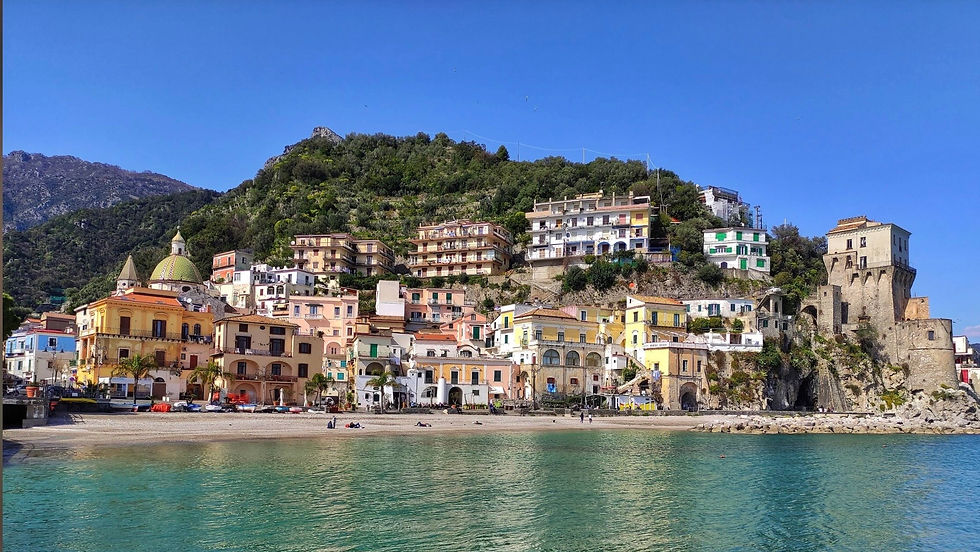
The Village of Cetera between Amalfi and Sorrento where Coltura di Alci is made
Colatura di Alci – Spaghetti in Anchovy – is another must. It is one of the easiest spaghetti dishes to make. Colatura is said to be related to Garum, the ancient Roman fish sauce. People used Garum as an everyday condiment for centuries. Its modern descendant is made in the small fisher village Cetara on the Amalfi coast. Between March and June, they make colatura from fresh anchovies caught off their coast.

Spaghetti made with Colatura di Alci, crushed Garlic, Olive Oil and some fresh Herbs
No wonder Amalfi was home to one of Italy’s earliest commercial fleets in the Middle Ages. The Amalfians fished anchovy since Roman time. Colatura is the liquid dripping from curing anchovies with salt. It is comparable to Asian fish sauce but a bit more watery Consumers can buy it in small bottles. For the spaghetti sauce, colatura is mixed with olive oil and a few crushed garlic cloves. It takes no more than 12 min. A perfect dish if you are short on time.

Spaghetti alla Nerano - a perfect Combination of Fried Zucchini, Chese and Pasta
Spaghetti alla Nerano – anther simple but delicious pasta dish. Its history is a bit shorter than the Colatura di Alci. It was “invented” in 1952 at the Ristorante Maria Grazia by Chef Donna Rosa. My intuition though tells me that she took an old family recipe and put it on her menu. Spaghetti al Nerano is made by thin-slicing zucchini, fried in olive oil and added to the spaghetti with grated Provolone di Monaco cheese – et voilà. Never had this dish. Definitely on the “to-eat” list. So many bloggers rate it top notch.
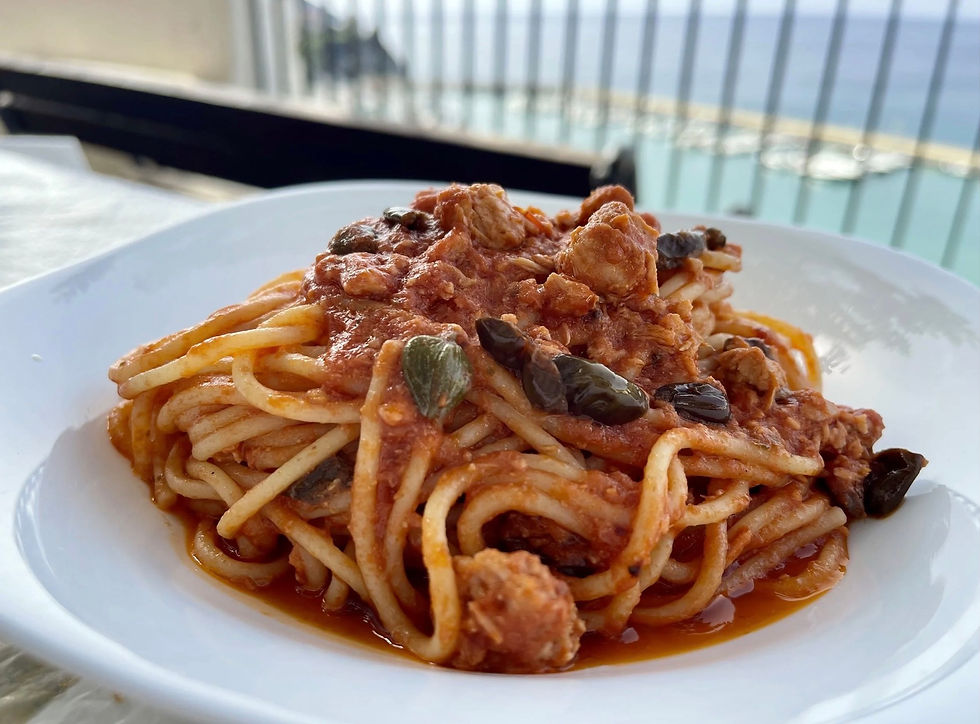
The Origin of Spaghetti alla Puttanesca is highly disputed between two Schools of Thoughts
Another pasta dish that we ought to try this summer comes with a very colorful name: Spaghetti alla Puttanesca – Prostitute Spaghetti. The name became popular in the food industry in the 1960s. There are several explanations for the weird name. Some attribute the dish to a restaurant owner on the island in Ischia who run out of ingredients one night in the 190s and made a dish from “any rubbish” (puttanata qualsiasi”) he had left. The Neapolitan brothel myth is more catching though. It dates back to the World War II when prostitutes in the Spanish Quarters made this simple dish between meetings with their suitors. Be it as it may, the sauce is a combination of simmered tomatoes (you can also put them in a freezer – when defrosting they fall apart - your sugo is ready), black olives, roasted garlic, capers and anchovies. It is apparently the most popular dish in Campania – will have to confirm this summer!

Spaghetti Vongole - I learnt preparing them on a Fisher Boat on the Laguna in Venice
Last pasta dish I mention today are Spaghetti Vongole – one of my favorites. I learned about this dish in Venice but Campania also lays claim on it. Seems that several Italians had the same idea at the same time. Spaghetti Vongole is also easy to make. Fry a few cloves of garlics in olive oil, throw in two handful of clams, wait until they start opening, extinguish with a glass of white wine and cook for 2 - 3 minutes, toss with the spaghetti. Also a dish that can be done in less than 20 minutes. Topp with a fresh herbs like parsley. To die for!
Still have to cover the sea food dishes that are on my list - I guess there is a sequel to this article "Campania - Food Rich in History II"


Comments