


J - 188 : Did Volcanos inspire the Idea of Purgatory?
Updated: Feb 23

Etna Eruption at Night - Catania in the Foreground
During the Holy Year in 2025, I had the chance to walk through all four Holy Doors in Rome. Was also invited to a private visit of the Sistine Chapel. For 20 minutes, we silently admired Michelangelo’s frescos where cardinals appoint their Popes. Having seen the ceiling during previous visits - sandwiched between dozens of other visitors - I focused on the artist’s “Last Judgement”. At the bottom, there are demons and devils, lost souls who never make it to paradise and the purgatory’s furnace. Knowing that the bible's books do not mention the purgatory, I wondered how this tale became so important that Michelangelo felt compelled to include it in his painting.

The "Last Judgement" was painted 1536 - 1541. The
large Fresco was commissioned by Pope Paul III
There are hundreds of purgatory paintings from the Renaissance depicting the hellish place in saucy details. Purgatory was a place where people were roasted on fire, boiled in heated oil, burnt on stakes and poisoned with toxic fumes. It was here – so the story goes – that the sinners’ souls get cleansed before they were allowed to ascend to heaven.
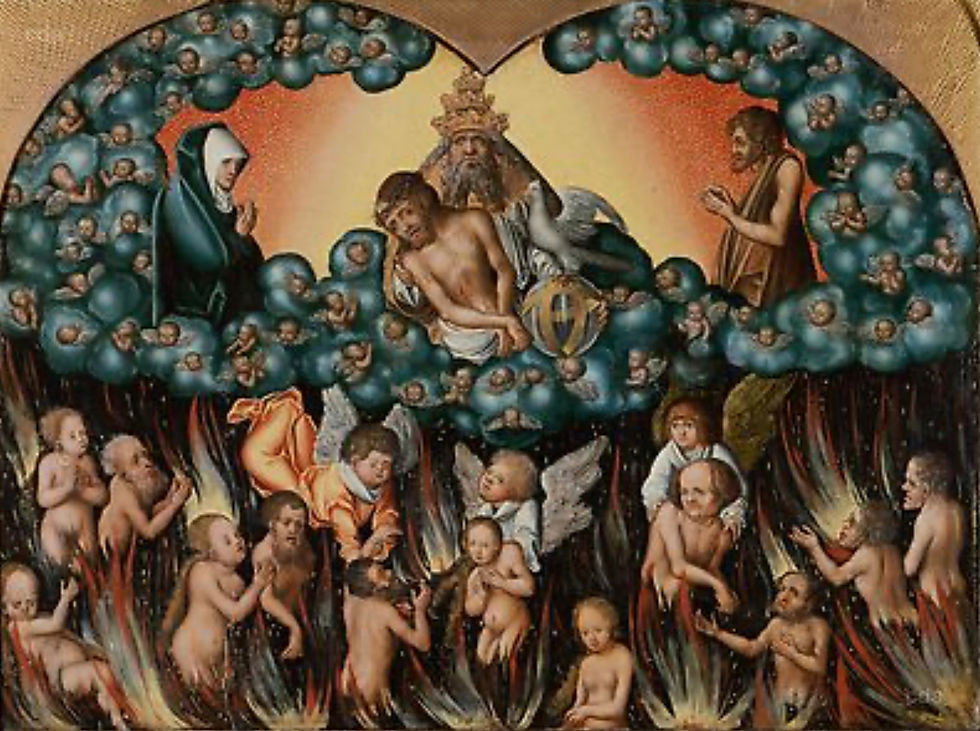
Purgatory painted by Lucas Cranach the Elder in 1515
Jesus never talked about a purgatory. In early Christianity it was not part of the narrative either. Such tales only appear by the 4th century AD in ecclesial texts, when Christianity became Rome’s state religion. Within decades, a 5 million strong underground community expanded to over 50 million people. Churches had to be built, the bible's books to be selected, the “Holy Word” to be copied, bishops to be ordained, religious dates to be set. The conversion from ancient believes to Christianity was fast. To facilitate the transition, Roman officials allowed old traditions to be integrated into Christian believes. There is a good argument that Christmas was the Roman winter solstice and Easter a pre-Christian fertility festival.

The Roman Empire's Conversion to Christianity started
under Constantine the Great in 313 AD with the Edict of
Milan. By 380 AD, Christianity was Rome's State Religion
How did the idea of a purgatory make it in our believe system? A hellish place underground where souls had to be purified by fire? Would not be surprised if the 4’000-year-old Zoroastrianism played a role. The Persian religion had many followers amongst Roman Legionnaires. One third of Rome’s army was stationed on the border to the Persian Empire. Zoroaster’s philosophy was simple “Good thoughts. Good words. Good deeds” will overcome evil. For Zoroastrians, Fire and Light were symbols of purity and wisdom. They thus cremated their dead. That fire and light could purify somehow stuck in the Roman mind. Still, it was an abstract concept.

Purification by Fire plays an important Role in the Zoroastrian Religion
These abstract ideas may have found their complement in the volcanos lining Italy’s arch of fire from Sicily to Naples. Etna, Vulcano, Stromboli and the Vesuvio were active during Roman time. Also, in Greek religion, the entrance to the Hades, the somber underworld for the deceased (the precise entrance was actually in Cumae, just next to the Campi Flegrei).

Rome's Grain Trade followed Sicily's east Coast then Italy's west Coast to Pozzuoli-Naples
As we sail this summer along these volcanos, we will see their glowing magma flows at night. And so did the thousands of Roman mariners who shipped year after year grain from Egypt to Rome. Theses view and smells must have been terrifying. Nowhere else in the Roman Empire were smoking mountains and rocks on fire.

Mount Etna at Night during an Eruption in 2021
That volcanos never stop spewing fire must have been even more horrifying. Any Roman knew that a fire eventually stops. The volcanos did not – they rumbled on. Some brave sailors probably visited the volcanos to have a closer look. I vividly remember the smelly, yellow and lifeless landscape of a which we climbed in 2021. Is it a far-fetched idea that these mariners thought that these hellish places were doors to the underworld?

Monte Vulcano is not active anymore - the landscape is still lifeless and there are strong sulphoric fumes everywhere - photo from our visit in 2021 - we climed the 195 m to the top
Roman soldiers and mariners were early adopters of Christianity. They knew about Zoroastrianism (purifidation by fire) and the hellish nature of volcanos. I am not surprised that early Christians interpreted volcanos in a religious way. They saw them as signs of divine judgement, of the coming apocalypse. For them, they were a depiction of hell. The eruption of Monte Vesuvio in 79 AD which killed thousands and buried Herculaneum and Pompeii, was God’s punishment for a sinful and hedonistic lifestyle. The natural disaster was interpreted through the lens of Sodom and Gomorrah.

Dante covered many Aspects of Purgatory in his Book Divine Comedy (1321) - look left!
The story of the purgatory never made it into the books of the bible, but Dante refers to it descriptively in his Divine Comedy. The purgatory was a folkish myth that became more and more official. By the 12th century, the purgatory was a fully integrated part of the Christian narrative. Confessions had to be introduced by the Forth Lateran Council in 1215 to ease the burden on the sinners – without confession the souls would have stayed permanently in purgatory.
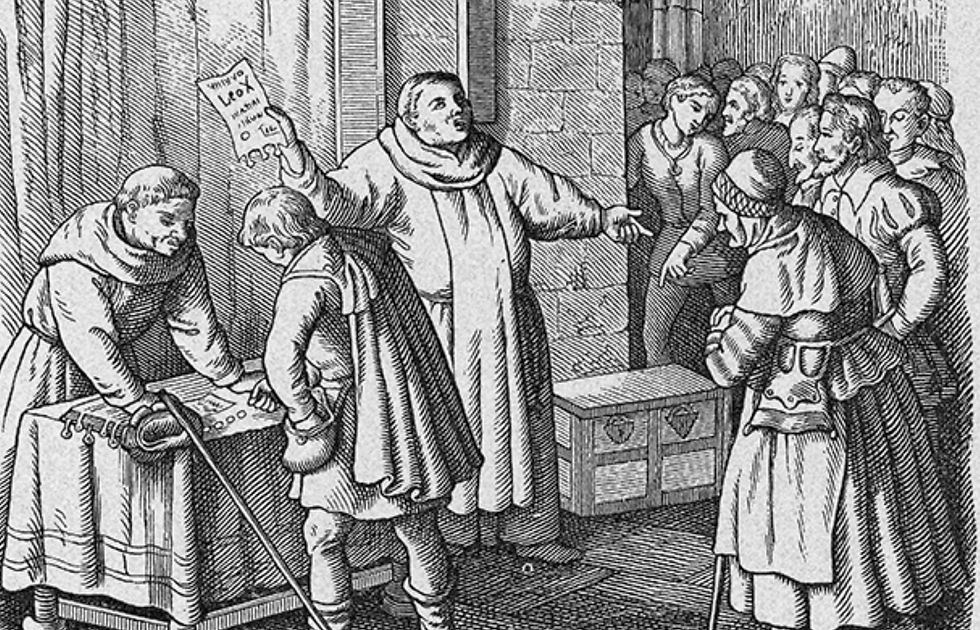
The widespread use of Indulgencies to finance the Church triggered Luther's Reformation
In 1476, Pope Sixtus IV who built the Sistine Chapel, took the recognition a step further. He made it an official business allowing Catholics to buy indulgences also for their deceased relatives suffering in purgatory. He needed the money to build Renaissance Rome.
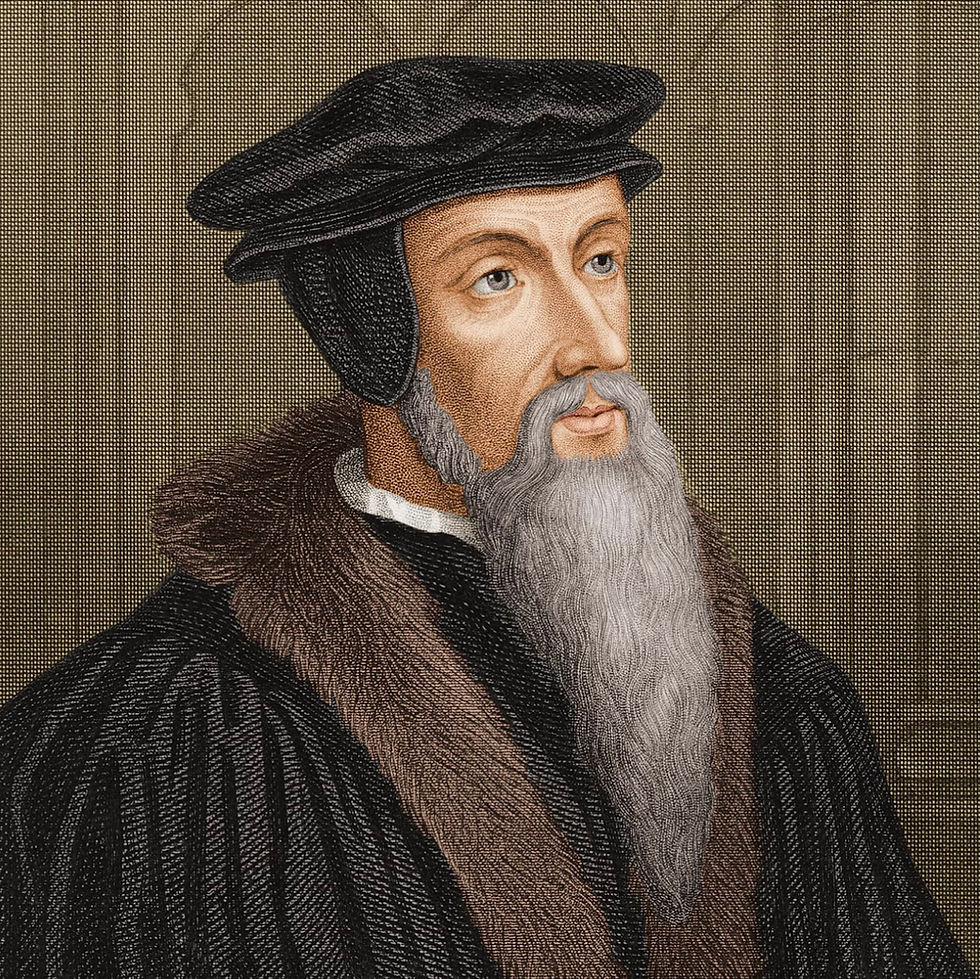
Johannes Calvin (1509-1564) from Geneva was one of
the Leaders of the European Protestant Movements
The protestant reformer Calvin had only this to say: “Purgatory is a deadly fiction of Satan which nullifies the cross of Christ, inflicts unbearable contempt upon God’s mercy and overturns and destroys our faith.”

The Stromboli seen from our the Afaed in 2021
Since then, science has demystified the nature of volcanos. They are not powered by divine will but by earthly plate tectonics. But standing on one of them still makes you feel small and powerless. Looking forward to the visits this summer when we sail from Malta to Naples.


Comments