


J - 112 : Wines from Campania

Pallagrello Nero from Caserta Province is rich in Tannins, deeply colored and ages well
When planning this blog a few weeks ago I wondered how much research I had to do. I knew so little about wines from Campania. Turns out that one of my old favorites is from here. Always believed that Greco di Tufo was from Puglia. As a student, I loved it. Not only for its golden, sunny color but for its attractive value. Greco di Tufo is a dry, quite bold wine with nice fruity notes. You could get a bottle for CHF 10 thirty years ago. Today, it costs about twice as much but it is still affordable. I would call it a good white wine for every day.
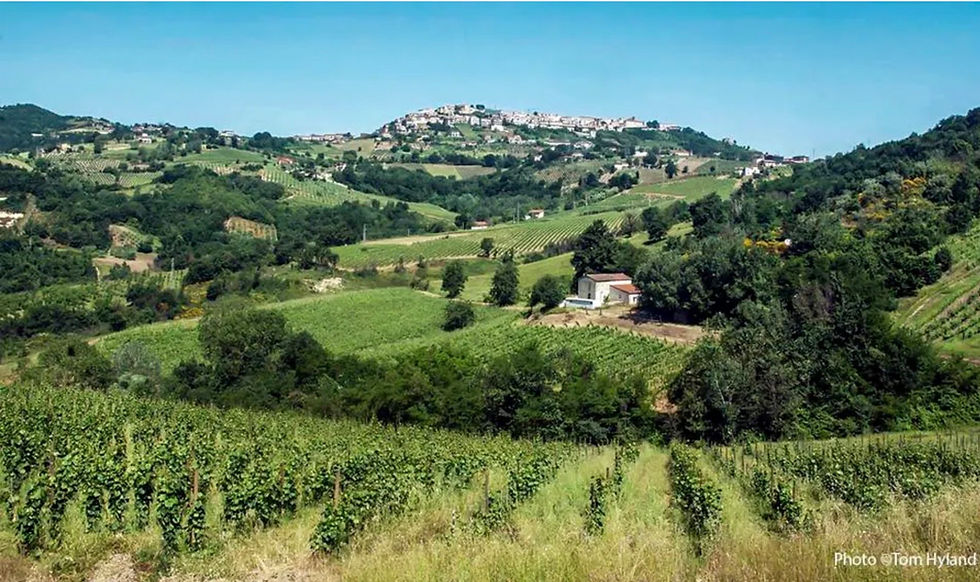
Greco di Tufo Vineyards in Montefusco
What is amazing about the wines from Campania are the grapes. The globally dominant varieties like Merlot, Pinot Noir, Cabernet Sauvignon et al. are rare again. Ancient grapes like the red Aglianico, Casavecchia and Piedirosso or the white Fiano, Falanghina, Greco, Biancolella, Coda di Volpe or Asprinio dominate. Campania produces only 165 mio liter or 3.3% of Italy's wine, 60% red, 40% white. But their reputation is excellent. The reds are known for their bold, heavy and intense nature. The whites for thieir mineral and floral notes.

Taurasi, one of Italy's unsung Great Reds - produced
in the Irpinia Province - is made from 85% Aglianico
Grapes, offers balanced acidity, firm tannins and notes
of dark Chocolates and Black Cherry
When asked about Campania, most visitors mention Naples, Pizza, Capri or Pompeii. But that the region is a treasure trove of ancient grapes goes mostly unmentioned. Even for me, a regular consumer of Italian wines, the names of the indigenous grapes sound unfamiliar. Had it not been for the Mastroberardino family who promoted Campania's ancient varieties, they may have been lost to the French grapes customers loved so much in the 1960s and 1970s. But the Mastroberardinos protected their local grapes and improved their wines to a standard that can compete with the finest Barolos. A top-level Taurasi is well suited for aging in barriques due to its strong tannin and flavors and can be kept up to 25 years. Am glad we sail this summer along the coast of Campania. Ample time to fill this substantial gap in our oenological know-how.

In Campania, vines are planted in all five regions
Wine making in Campania has a long tradition. The Greek settlers who arrived here in the 6th century BC called the area Oinotria, land of wine. The volcanic soil and the warm but sufficiently humid climate produced one of the best wines in antiquity. Maybe that is the reason the Romans called it Campania Felix, the happy land. All the indigenous grapes go back to antiquity. After the collapse of the Roman Empire, these original varieties survived in local monasteries and were rediscovered by the Bourbon Kings of Naples. Campania was said to have Italy's best wines. The two World Wars were not good for the region. It is doubtful whether the ancient local grapes had survived without the persistence of the Mastroberardino family. I won't have enough space to present many wines thus I pick four:

Starting with Fiano di Avellino. The wine has a a subtle nose like honey dew melon and fresh peaches. It is rather dry, well balanced and easy to drink. Many people love it with seafood. The top bottles go for 20 - 25 Euros - it is a good catch.

Falanghina is another ancient grape that is winning over young wine makers. The grape was once described as a workhorse since it is sour when harvested too early. But due to the improvements in wine making it came into its own righs. Falanghina is a bit bolder and dryer than Fiano, has more acidity and a note of green apple on the nose. It has a light straw color and great minerality on the palate. A tad more pricy than Fiano it is still affordable.

Piedirosso is the next wine on my list. Grown in the Campi Flegrei on volcanic soils, Monte Vesuvio, Ischia and Capri, the wine is high in minerals. It has an intense red color, some say it is close to purple. On the nose it has notes of red berries, cherries and plums. It is relaltively dry on the palate and lighter in tannins than Aglianico. It is best served cool at 14 - 16 Celsius. Due to its lower tannin levels, one should not keep the wine beyond 5 years.

Campania also produces nice Rosés made from grapes also used for whites. They usually grow closer to the sea. Most of them are non-descript, very affordable and best consumed at 10 Celsius. Just the right type of wines for an apero afte the visit of Greek temples or a Norman castle on the shore. Definitely on our order list.
This blog is more a door opener than a comprehensive summary of Campania's fascinating wines. They deserve more time to study. The fact that modern technology resucitated these ancient varieties is encouraging. Now Campania's grapes spread from Italy to other places on the globe to please the palate of wine lovers everywhere.

The hills behind the Amalfi Coast produce fabulous whites from varietals only seen at the Costa D'Amalfi DOC: They include Biancolella, Fenile, Ginestra and Ripoli. Fiorduva, a blend from Fenile, Ginestra and Ripoli, matured in oak, has an excellent reputation. Seems like the definite Must for our cruise this summer.


Comments